
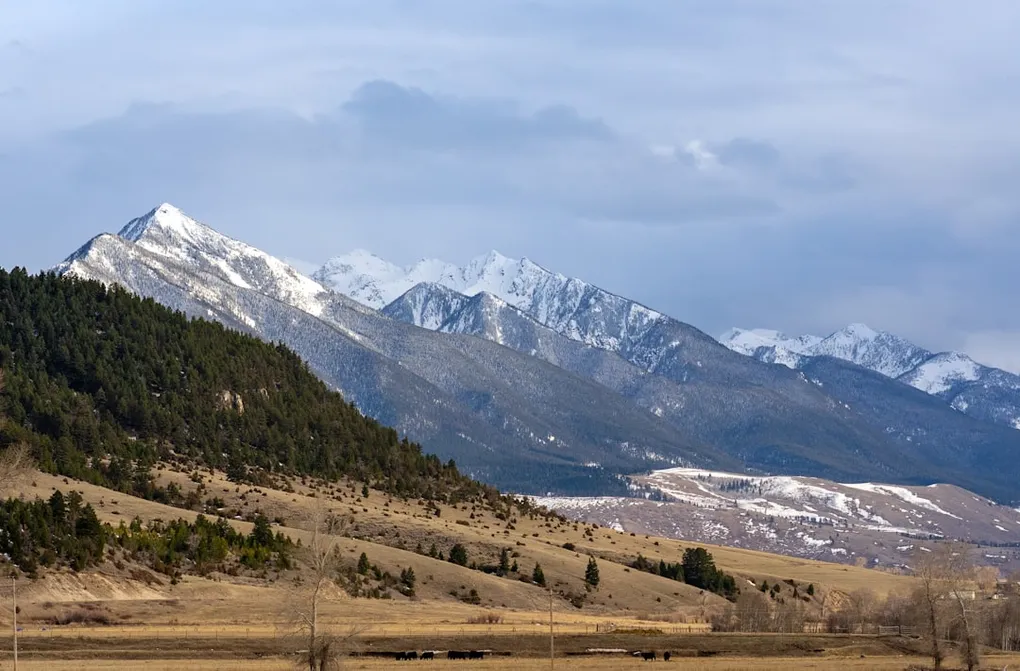
If you’ve lived in Montana for any length of time, you’ve likely experienced the dramatic temperature swings that can occur in winter. One day it’s a frigid -10°F, and the next day it’s a balmy 45°F. This remarkable phenomenon is caused by Chinook winds – warm, dry winds that descend from the Rocky Mountains and can transform winter into spring in a matter of hours.
What Are Chinook Winds?
The term “Chinook” comes from the Native American Chinook people of the Pacific Northwest. In Montana, these winds are sometimes called “snow eaters” because they can melt a foot of snow in a single day.
Chinook winds are a type of foehn wind – warm, dry air that flows down the lee side of a mountain range. In Montana’s case, these winds descend the eastern slopes of the Rocky Mountains, bringing dramatic weather changes to cities like:
- Great Falls - Known as the “Chinook Capital” of Montana
- Browning - Holds the record for the fastest temperature rise in U.S. history
- Helena - Frequently experiences winter warming events
- Billings - Receives periodic Chinook relief from cold snaps
How Do Chinooks Form?
The formation of Chinook winds involves several atmospheric processes:
1. Pacific Moisture Movement
Moist Pacific air moves eastward toward the Rocky Mountains, carrying water vapor from the ocean.
2. Orographic Lifting
As this air mass encounters the mountains, it’s forced upward. As air rises, it cools at approximately 5.5°F per 1,000 feet (wet adiabatic lapse rate).
3. Condensation and Precipitation
The cooling air reaches its dew point, causing moisture to condense and fall as rain or snow on the western slopes of the Rockies.
4. Drying Descent
Now drier, the air descends the eastern slopes. As it descends, it warms at approximately 5.5°F per 1,000 feet (dry adiabatic lapse rate). Because it lost moisture climbing the western side, it warms more rapidly on the descent than it cooled on the ascent.
5. Dramatic Warming
By the time the wind reaches the plains of eastern Montana, it can be 30-40°F warmer than the air it’s replacing, with relative humidity often dropping below 20%.
Montana’s Chinook Records
Montana holds some remarkable Chinook-related weather records:
Browning, Montana - January 15, 1972
- Temperature rose from -54°F to 49°F in 24 hours
- That’s a 103-degree increase in one day!
- Still holds the U.S. record for largest 24-hour temperature change
Loma, Montana - January 15, 1972 (same day as Browning)
- Temperature rose 103°F in just 24 hours
- From -54°F to 49°F
Fairfield, Montana - December 1924
- Temperature rose 84°F in 12 hours
- From -21°F to 63°F
Impact on Montana Communities
Chinooks have significant effects on daily life in Montana:
Benefits:
- Livestock Relief - Provides temporary warming during harsh winters
- Snow Removal - Rapidly melts snow from roads and fields
- Energy Savings - Reduces heating costs during winter
- Mental Health - Breaks up long stretches of extreme cold
Challenges:
- Icy Conditions - Rapid melting followed by refreezing creates hazardous ice
- Flooding - Quick snowmelt can overwhelm drainage systems
- Structural Stress - Rapid temperature changes stress buildings and infrastructure
- Health Issues - Some people experience “Chinook headaches” from rapid pressure changes
Forecasting Chinooks
Modern weather forecasting has improved our ability to predict Chinook events. Key indicators include:
- Upper-level winds - Strong westerly flow at 500mb level
- Pressure gradients - High pressure west, low pressure east of the Rockies
- Mountain wave clouds - Lenticular clouds form over the Continental Divide
- Temperature inversions - Breaking down existing cold air masses
At BigSkyWeather, we monitor these conditions closely to provide advance warning of incoming Chinook winds.
The Chinook Arch
One of the most spectacular visual signs of an approaching Chinook is the Chinook Arch – a distinctive cloud formation that appears as a well-defined band of clouds over the mountains. This arch forms at the boundary between the cold air being displaced and the warm Chinook winds.
When you see a Chinook arch to the west:
- Temperature rise is likely within 6-12 hours
- Wind speeds may reach 40-60 mph
- Relative humidity will drop dramatically
Climate Change and Chinooks
Recent studies suggest that climate change may be affecting the frequency and intensity of Chinook winds:
- Frequency - Some research indicates Chinook events may become less frequent
- Intensity - When they do occur, temperature contrasts may be more extreme
- Duration - Warming events may last shorter periods
This is an active area of meteorological research with significant implications for Montana’s winter weather patterns.
Staying Safe During Chinooks
While Chinooks are generally welcomed in Montana, they do require some precautions:
- Watch for ice - Rapid melting creates slick conditions
- Secure loose objects - High winds can damage property
- Monitor flood watches - Especially in areas with heavy snowpack
- Dress in layers - Temperatures can swing wildly throughout the day
Conclusion
Chinook winds are one of Montana’s most dramatic weather phenomena. These “snow eaters” bring welcome relief from winter’s grip, demonstrating the powerful interplay between mountains and atmosphere that makes Big Sky Country’s weather so unique.
Understanding Chinooks helps us appreciate the complex meteorology of our region and prepare for the rapid changes they bring. Whether you’re a longtime Montanan or new to the state, experiencing a Chinook wind is an unforgettable reminder of nature’s power.
Want to track upcoming Chinook events? Check out our Montana Weather Dashboard for real-time conditions and forecasts for all major Montana cities.
Questions about Montana weather? Contact us – we love talking weather!